
From Beginner to Fluent: The Secret to Crisp, Clear Recitation Using the Rules of Izhar
What a profound awakening it is when a soul realizes that reciting the Quran is not just a mechanical exercise, but an art where heartfelt devotion intertwines with technical mastery! Within the realms of Josoor Al-Quran, your sacred quest begins at a transformative milestone in mastering izhar rules of tajweed.
Through Josoor Al-Quran, we place the foundations of sound pronunciation in your hands, led by the rule of “Izhar” as the first luminous step toward mastery. Far more than a technicality, it is the master key to phonetic clarity, empowering you to leave behind the faltering of uncertainty for the seamless flow of an expert reciter. Under the supervision of elite educators who pave your way toward exquisite recitation, the verses of Allah will flow from your tongue with confidence and beauty, embodying the words of the Prophet (PBUH): “The one who is proficient in the recitation of the Qur’an will be with the honourable and obedient scribes (angels) and he who recites the Qur’an and finds it difficult to recite, doing his best to recite it in the best way possible, will have two rewards.“ [Al-Bukhari and Muslim].
What Is Izhar?

The word Izhar literally means “clarity” or “to make clear.” In Tajweed, Izhar refers to pronouncing letters clearly and distinctly without nasalization (ghunnah) when specific letters appear after Noon Sakinah (نْ) or Tanween (ــًــٍــٌ). Understanding izhar rules of tajweed is essential for every student seeking authentic recitation.
The Architecture of Articulation: The Six Throat Letters
These six letters comprise the Pillars of Izhar and are classified as throat letters for a significant reason: their deep, guttural origins necessitate a clear separation in sound. Because they come out from the throat’s distinct points of articulation, the Noon Sakinah or Tanween must be voiced with absolute purity, without any merging or nasalization.
The six letters : Many students find it easier to memorize the six letters using the famous mnemonic sentence:
The sentence is: “أخي هاك علماً حازه غير خاسر”
The first letter of each word :
- ء (Hamzah) & هـ (Haa) :The Depths of the Throat.
- ع (Ayn) & ح (Haa) : The Center of the Throat.
- غ (Ghayn) & خ (Khaa) :The Upper Throat.
By remembering this simple sentence, you can instantly identify when to apply the izhar rules of tajweed , ensuring your recitation remains crisp, clear, and phonetically accurate as you transition from the “N” sound to the throat letter.
Clear Quran Examples of Izhar in Tajweed
| Example | Rule Type | Verse (Surah:Verse) | Articulation & Mastery Tips |
| مِنْ ءَايَاتِنَا | Noon Sakinah + ء | {لِنُرِيَكَ مِنْ آيَاتِنَا الْكُبْرَى}
[Taha20:23] |
|
| مِنْ هَادٍ | Noon Sakinah + هـ | {وَيَقُولُ الَّذِينَ كَفَرُوا لَوْلَا أُنْزِلَ عَلَيْهِ آيَةٌ مِنْ رَبِّهِ ۗ إِنَّمَا أَنْتَ مُنْذِرٌ ۖ وَلِكُلِّ قَوْمٍ هَادٍ}
[Ar-Ra’d 13:7]* |
|
| عَذَابٌ عَظِيمٌ | Tanween + ع | {خَتَمَ اللَّهُ عَلَىٰ قُلُوبِهِمْ وَعَلَىٰ سَمْعِهِمْ ۖ وَعَلَىٰ أَبْصَارِهِمْ غِشَاوَةٌ ۖ وَلَهُمْ عَذَابٌ عَظِيمٌ}
[Al-Baqarah 2:7] |
|
| فَوْزٌ عَظِيمٌ | Tanween + ع | {قَالَ اللَّهُ هَٰذَا يَوْمُ يَنْفَعُ الصَّادِقِينَ صِدْقُهُمْ ۚ لَهُمْ جَنَّاتٌ تَجْرِي مِنْ تَحْتِهَا الْأَنْهَارُ خَالِدِينَ فِيهَا أَبَدًا ۚ رَضِيَ اللَّهُ عَنْهُمْ وَرَضُوا عَنْهُ ۚ ذَٰلِكَ فَوْزٌ عَظِيمٌ}.[ Al-Ma’idah 5:119] |
|
| أَنْعَمْتَ | Noon Sakinah + ع | {صِرَاطَ الَّذِينَ أَنْعَمْتَ عَلَيْهِمْ غَيْرِ الْمَغْضُوبِ عَلَيْهِمْ وَلَا الضَّالِّينَ}
[Al-Fatiha 1:7] |
|
| عَلِيمٌ خَبِيرٌ | Tanween + خ | {يَا أَيُّهَا النَّاسُ إِنَّا خَلَقْنَاكُمْ مِنْ ذَكَرٍ وَأُنْثَىٰ وَجَعَلْنَاكُمْ شُعُوبًا وَقَبَائِلَ لِتَعَارَفُوا ۚ إِنَّ أَكْرَمَكُمْ عِنْدَ اللَّهِ أَتْقَاكُمْ ۚ إِنَّ اللَّهَ عَلِيمٌ خَبِيرٌ}
[Al-Hujurat 49:13] |
|
| غَفُورٌ حَلِيمٌ | Tanween + ح | {…وَاعْلَمُوا أَنَّ اللَّهَ يَعْلَمُ مَا فِي أَنْفُسِكُمْ فَاحْذَرُوهُ ۚ وَاعْلَمُوا أَنَّ اللَّهَ غَفُورٌ حَلِيمٌ}
[Al-Baqarah 2:235] |
|
| إِنْ خَفْتُمْ | Noon Sakinah + خ | {وَإِذَا ضَرَبْتُمْ فِي الْأَرْضِ فَلَيْسَ عَلَيْكُمْ جُنَاحٌ أَنْ تَقْصُرُوا مِنَ الصَّلَاةِ إِنْ خَفْتُمْ أَنْ يَفْتِنَكُمُ الَّذِينَ كَفَرُوا…}
[An-Nisa 4:101] |
|
| قَوْلًا غَيْرَ | Tanween + غ | {فَبَدَّلَ الَّذِينَ ظَلَمُوا قَوْلًا غَيْرَ الَّذِي قِيلَ لَهُمْ فَأَنْزَلْنَا عَلَى الَّذِينَ ظَلَمُوا رِجْزًا مِنَ السَّمَاءِ بِمَا كَانُوا يَفْسُقُونَ}
[Al-Baqarah 2:59] |
|
Why Izhar Rules of Tajweed Matter for Beginners
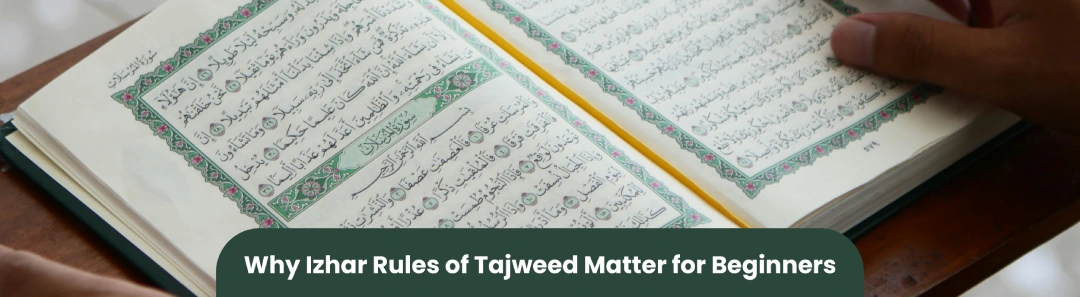
- Foundation of Makharij: Izhar rules teaches students how to precisely hit the correct articulation points of the tongue and throat.
- Ghunnah Control: Mastering izhar rules of tajweed teaches students how to stop nasal sounds at the appropriate times, resulting in a clean recitation.
- Building Confidence:Because it is simple (no merging or stretching), students gain a quick “win” and mastery in their first steps.
- Clarity & Flow: It produces a crisp, measured sound, enabling Josoor Al-Quran students to recite with professional clarity from the start.
The Impact of Izhar on Recitation Quality
- Crisp Pronunciation:Makes each letter distinct, preventing “slurring” of sounds.
- Balanced Rhythm:Maintains a consistent pace by preventing accidental rushing or blending of words.
- Greater Accuracy: Maintains the integrity of the Quranic text by granting each letter its full right without alteration.
From Rule to Fluency: Your Journey with Josoor Al-Quran
The core mission of Josoor Al-Quran is to move from a state of “conscious effort” to one of “natural fluency” when applying izhar rules of tajweed and other essential principles.
We believe that true proficiency occurs when the rules become second nature. We can help you transform Izhar from a technical task to an automatic habit using our methodology of consistent listening, guided repetition, and mindful practice. What distinguishes us is our elite faculty: our instructors are highly qualified graduates of Al-Azhar Al-Sharif, ensuring you receive the most authentic and precise training possible.
- Reaching this level of spontaneity allows your heart and mind to focus on what is most important:
- Deep Reflection: Going beyond the structure to understand the divine message.
- Spiritual Connection: Practice Khushu (tranquility) during each recitation.
- Meaningful Impact: Allowing the Quran to resonate with your soul.
Step into a world of fluent and soulful recitation with Josoor Al-Quran.
The Foundation of Clarity: Mastering Izhar with Josoor Al-Quran
Izhar reminds us that precision is at the heart of Qur’anic recitation. By giving each letter its proper sound through izhar rules of tajweed, the reciter preserves the clarity and integrity of Allah’s words. Izhar mastery supports attentiveness, patience, and discipline, all of which elevate recitation above the level of simple reading. As this rule becomes second nature, it paves the way for a more fluid, confident, and meaningful recitation of the Qur’an.
Start building your strong Tajweed foundation today and achieve a clear, authentic recitation under the guidance of Al-Azhar’s elite scholars at Josoor Al-Quran via: josooredu.com
Book Your Free Trial Session and Begin Your Journey Now! https://josooralquran.com/free-online-test/
Contact Us:
Email: info@josooralquran.com
WhatsApp: (+966 57 209 4056 )
Frequently Asked Questions:
- Why is Izhar specifically called “Izhar Halqi” (Throat Izhar)?
The word Izhar, which means clarity, is labeled as Halqi (vocal/throat) because all six letters that cause this rule {ء, هـ, ع, ح, غ, خ}originate from the throat (Al-Halq). This distinguishes it from other forms of Izhar, such as Izhar Shafawi (associated with the letter Meem).
- Can Izhar occur within a single word, or must it be between two separate words?
Unlike some Tajweed rules (like Idgham) which only happen between two words, Izhar can occur in both. It can appear in the middle of a single word (like أَنْعَمْتَ) or between two words (like مِنْ هَادٍ).
- What is the most common mistake students make when practicing izhar rules of tajweed?
The most common error on the Noon Sakinah is (forced silence) or Qalqalah (bouncing the sound). Students frequently pause too long to ensure clarity, interrupting the flow. At Josoor Al-Quran, our Al-Azhar instructors teach you how to achieve “Clarity with Continuity” flowing smoothly without bouncing the letter.
- Why are the letters (غ) and (خ) sometimes considered “easier” or “different” in Izhar?
Technically, these two letters are closest to the mouth. Because they are closer to the Noon’s exit point, the separation is slightly more noticeable than with deeper letters like Hamzah. However, they must be careful not to make any “scraping” sounds that mimic Idgham.